Key points
- UV flatbed suits full-colour logos on flat, rigid items such as acrylic, wood, pens and mice.
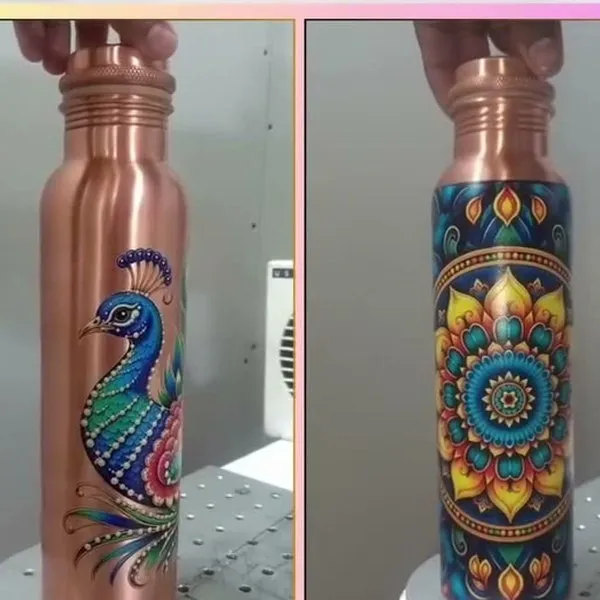
- Rotary UV wraps a seamless 360° print around bottles and tumblers, including a different name on each piece.
- UV DTF transfers suit curved, tapered or textured items the print head cannot follow.
- Laser marking is permanent and single-tone, best for premium metal, leather and wood gifts.
- DTF is the method for T-shirts, polos, caps and bags.
You’ve picked the gift. Now someone asks: “How do you want the logo: UV, DTF or laser?” The honest answer is that it depends on three things: what the product is made of, what shape it is, and what your logo looks like. Here is how we decide on our own press floor.
The short version
| If you have… | Use | Why |
|---|---|---|
| A full-colour logo on a flat, rigid item (acrylic, wood, pens, mice, notebooks) | UV flatbed | Sharp, vivid colour printed directly on the surface |
| A design that should wrap all the way round a bottle or tumbler | Rotary UV | The product rotates under the head, so the print is a seamless 360° |
| A curved, tapered or textured item the print head can’t follow | UV DTF | A printed transfer that bonds to almost anything |
| A premium metal, leather or wood gift where the mark must last forever | Laser marking | Marks the material itself, so nothing can fade or peel |
| Fabric: T-shirts, polos, caps, bags | DTF | Heat-pressed, flexible, full colour on any fabric |
UV flatbed printing
UV ink is cured by ultraviolet light the instant it lands, so it sits crisp on top of non-porous surfaces instead of soaking in. A white ink layer underneath means colours stay bright even on black or clear materials.
Best for: acrylic awards and plaques, wooden frames and coasters, pens, mice, cubes, notebooks, suitcase shells, or anything else that can lie in a jig on the bed. Because a whole bed of identical items prints in one pass, it’s efficient for bulk runs.
Watch out for: strongly curved surfaces. That’s what rotary UV is for.
Rotary UV (360°) printing
Same ink, same curing, but the bottle sits on a rotating attachment and turns as it prints. The result is a continuous design with no seam or sticker edge.
Best for: bottles, flasks, tumblers and copper bottles, especially full-wrap artwork or personalised names where every piece is different.
Watch out for: heavily tapered shapes and products with handles in the way of the print area. Those often suit UV DTF better.
UV DTF transfers
UV DTF prints your design onto a film, then transfers only the inked artwork (no clear background) onto the product. It is waterproof and scratch-resistant.
Best for: mugs, gift boxes, pouches and items with awkward shapes or textures. It’s also handy for a mixed kit where you want one identical logo across several different products.
Watch out for: you can feel a very slight raised edge if you run a fingernail over it. For a truly flush finish on a round item, rotary UV is better.
Laser marking and engraving
A laser changes the surface of the material itself. On coated metal it removes the coating to reveal bright steel; on wood and leather it darkens; on anodised metal it creates a crisp contrasting mark.
Best for: premium executive gifts (metal flasks, pens, diaries, leather goods, mobile stands) and anything that needs serial numbers, names or very fine text.
Watch out for: it’s not full colour. If your logo’s colours matter, choose UV.
DTF for apparel and bags
DTF (direct-to-film) prints the design onto a film with a white base and adhesive, then heat-presses it onto fabric. It stays flexible and vivid wash after wash, on light or dark fabric.
Best for: team T-shirts and polos, event uniforms, caps, backpacks and bags.
How to decide in two questions
- Does the colour of the logo matter? If yes, rule out laser marking.
- Is the surface flat, round, awkward, or fabric? Flat → UV flatbed. Round → rotary UV. Awkward → UV DTF. Fabric → DTF.
If a product could go two ways, ask for a mock-up of each. Seeing your logo on the real product makes the decision obvious, and it’s part of every quote we send.